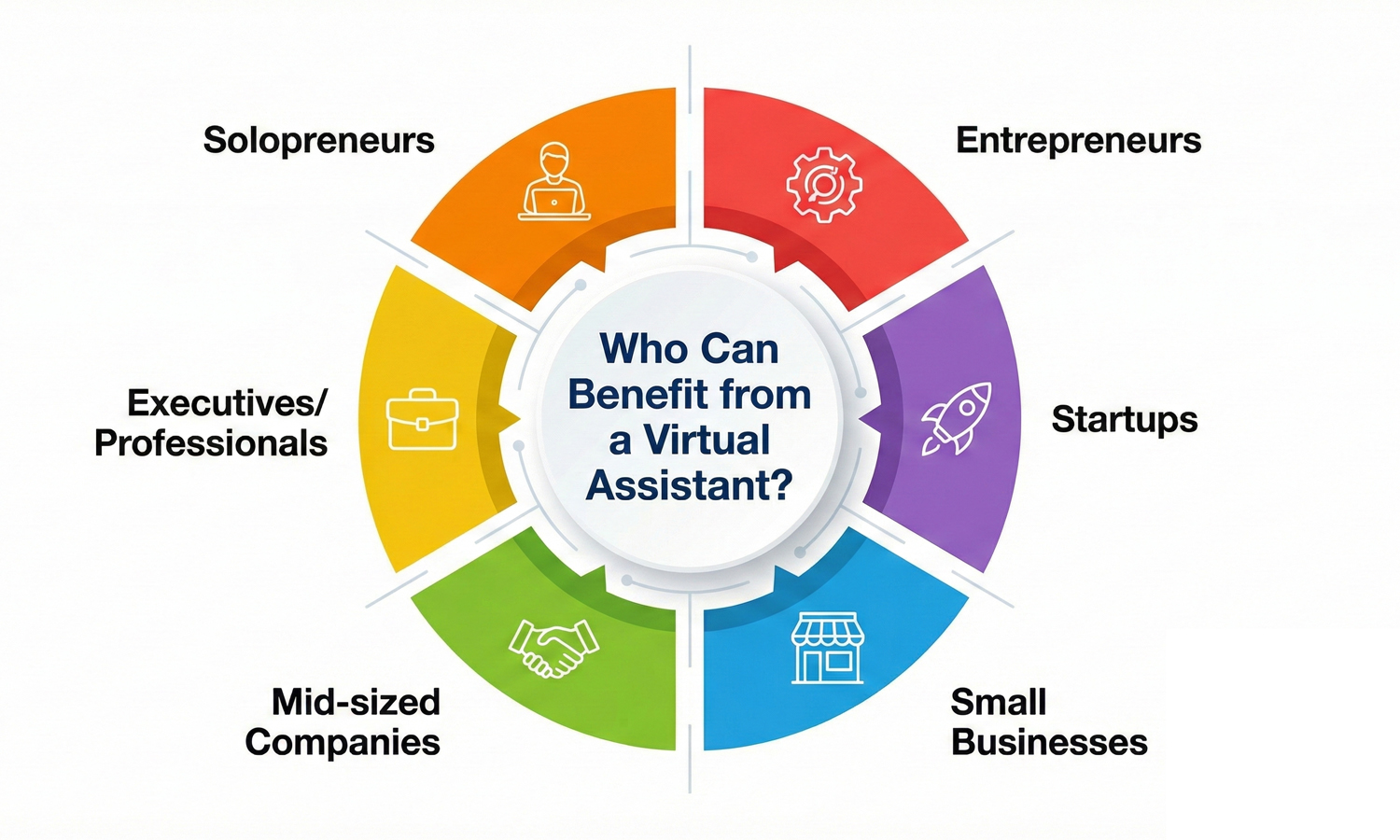
Who can benefit from a virtual assistant?
Virtual assistants (VAs) aren't just for big corporations with deep pockets. They're for anyone who's tired of feeling like there aren't enough hours in the day. If you've ever ended a workday wondering where all the time went and realized most of it was swallowed by emails, scheduling, and admin tasks that someone else could have handled then this is for you.
The Solopreneur: Doing Everything, All at Once
Running a one-person business sounds freeing until you realize you're also your own secretary, social media manager, accountant, and customer support team. It's a lot.
A good VA takes the repetitive stuff off your plate like inbox management, scheduling, social media posts, basic research, so you can actually focus on the work that made you start your business in the first place. And if you're wondering whether a VA is worth it compared to hiring someone full-time, the difference is bigger than most people expect.VA or full-time? Find out which fits your business best.
The Entrepreneur: Big Ideas, Not Enough Time
Entrepreneurs are natural visionaries. The problem is, turning a vision into reality takes an enormous amount of unglamorous work, like coordinating projects, chasing deadlines, handling customer complaints, and tracking invoices. That's the stuff that quietly drains you. A VA takes it off your hands so you can stay focused on the work that actually moves your business forward.
The Startup Team: Scrappy, Stretched, and Spinning Plates
Most early-stage startups are operating with a skeleton crew. Everyone's wearing multiple hats, and burnout is always lurking around the corner.
Bringing in a VA, without the cost or commitment of a full-time hire, gives your team room to breathe. Someone can own the scheduling, the outreach, and the content, while your core team focuses on building something worth talking about.
The Small Business Owner: Community-First, Admin-Last
Small business owners succeed because they're close to their customers. But ironically, the daily grind of running a business often pulls them away from exactly that.
When a VA is handling order processing, customer inquiries, and financial recordkeeping, you get to do what you're actually good at, which is building relationships and running a business people love.
The Mid-Sized Company: Growing Pains Are Real
Growth is exciting. It's also messy. As teams expand, communication gets complicated, HR needs more support, and executives start drowning in logistics. A VA plugs into the gaps, helping with onboarding, tracking campaigns, coordinating travel, and keeping internal communications from falling through the cracks. It's not glamorous work, but without it, everything slows down. Explore how VAs drive business growth.
The Executive: Because Your Time Is Worth More
Leaders at the top of an organization often spend a shocking amount of time on things that don't require their level of expertise, like calendar juggling, travel arrangements, and meeting prep. A VA acts as a buffer, protecting your time, prioritizing what actually needs your attention, and making sure you show up prepared. The result is more strategic thinking and less operational noise.
So, Who Actually Needs a VA?
Anyone who feels stretched. Anyone who ends the day with a to-do list that's longer than when they started. Anyone who knows they're capable of more but can't seem to find the time to get there. A virtual assistant doesn't just check boxes. They give you back something genuinely valuable, which is time. And what you do with that time is entirely up to you. The better question isn't "Do I need a VA?" It's "What would I do with an extra ten hours a week?"